"O barulho é a tortura do homem de pensamento" (Schopenhauer)
Mostrar mensagens com a etiqueta Efeitos do ruído. Mostrar todas as mensagens

quarta-feira, 23 de julho de 2014

Negative Effects of Noise Pollution

Many studies have been conducted to study the effects of noise pollution on health and wellness, and the results have shown that noise pollution can negatively impact you in the following ways:


Productivity
We all know that noise can be distracting, and research proves this. One study examined children exposed to airport noise and found that their reading ability and long-term memory was impaired. Those working in noisy office environments have also been found to be less cognitively motivated, and to have higher stress levels, according to a Cornell University study.


Health
Perhaps the most serious problem created by sound pollution is the impact it has on our health. Because sound pollution can trigger the body’s stress response, one of its major health effects ischronic stress and the high levels of stress hormones that go with it. As a result, noise pollution has also been linked with health problems such asheart disease, high blood pressure, and stroke. 

It’s also been linked with musculoskeletal problems, as a Cornell University study on office noise found that those working in noisy office environments can also be less likely to ergonomically adjust their workstations for comfort, which can contribute to physical problems. Noise pollution can also impact sleep quality by preventing sleep and disrupting sleep cycles. And, perhaps most significantly, because chronic stress can lower your immunity to all disease, noise pollution is a general threat to health and wellness.


What can you do to protect yourself from chronic stress? This article on reducing the effects of noise pollution has some important ideas for you.


quarta-feira, 14 de maio de 2014

How To Reduce Noise Pollution and Its Negative Effects

Noise pollution can negatively impact the body in significant ways, including elevated blood pressure, impaired cognitive functioning, and other effects of chronic stress. The following are effective strategies you can use to limit the negative impact of noise pollution and safeguard your health and happiness.


Limit The Noise
Your first line of defense against noise pollution is to do what you can to control your environment, and limit the noise that enters your space. The following are ways that you can limit environmental noise and blunt the effects of noise pollution: 
  • Double-Paned Windows and Weather Stripping: If you live in a noisy city or near an airport, you can reduce noise in your home considerably by installing dual-paned windows, weather stripping, and even added insulation. As a bonus, these changes can also reduce your heating and cooling bills, and help the environment! 
  • Reduce Workplace Noise: If you work in a noisy office, you may want to talk to your employer about taking steps to reduce office noise, which has been found to affect the health and productivity of workers. 
  • Turn Off The T.V.: When you’re at home, a constant backdrop of television can have an effect on you as a distraction and potential stressor. 
  • Make Bigger Changes: You may even consider moving or changing jobs if you experience significant levels of noise that you can’t reduce in other ways. It sounds like a drastic step, but considering the toll that a noisy environment can take on your health, it may be an option to consider. 

quarta-feira, 30 de abril de 2014

Mais de 40% da população portuguesa tem problemas de concentração devido ao ruído

Para assinalar o Dia Internacional da Consciencialização para o Ruído, a GAES-Centros Auditivos acaba de divulgar um estudo onde mostra como o ruído afecta o dia-a-dia das pessoas. Em Portugal, mais de 40% da população sofre de problemas de concentração associados ao ruído.

A perda auditiva é um problema de saúde que afecta já cerca de 1 milhão de portugueses e, a nível mundial, cerca de 120 milhões de pessoas têm já a sua audição afectada devido ao ruído.

O ruído em excesso - ou poluição sonora - é um grave problema que afecta toda a população, em especial a que vive nas grandes cidades. Todos os dias, são várias as actividades que expõem os cidadãos a níveis de poluição sonora altamente prejudiciais para a saúde. Sem se darem conta, estão expostos a situações em que o ruído ambiente é constante e com um elevado impacto nocivo para o seu bem-estar.

Cerca de 60% da população portuguesa vive com níveis de ruído acima do recomendado, que é de 55 decibéis, e cerca de 20% está exposta a barulho incomodativo (mais de 65 decibéis) de forma constante, o que se manifesta num forte impacto para a sua saúde, em especial de possíveis problemas auditivos.

Dulce Martins Paiva, directora-geral da GAES – Centros Auditivos Portugal, afirma: «Na GAES-Centros Auditivos temos a preocupação de alertar os nossos pacientes para o ruído que os rodeia, e que pode prejudicar a sua audição. Desenvolvemos este estudo em cinco países, onde estamos presentes – Portugal, Espanha, Venezuela, Equador e Chile – e os resultados foram muito semelhantes. As pessoas precisam de estar alertas para os níveis de ruído no seu dia-a-dia, e na GAES podemos ajudá-lo a combater possíveis problemas auditivos devido ao ruído.»

No dia 30 de Abril, a GAES-Centros Auditivos vai alertar a população para o excesso de ruído nas grandes cidades, e irá marcar presença em Coimbra com uma acção de rua na Avenida Central às 18:00.


Notícia de Diário Digital

sexta-feira, 4 de janeiro de 2013

Music is the soundtrack to our lives

Music is the soundtrack to our lives. BUT every time you listen to loud music for too long, you increase the risk of damaging your hearing.

If your exposure to loud music is repeated regularly, the damage could be permanent.
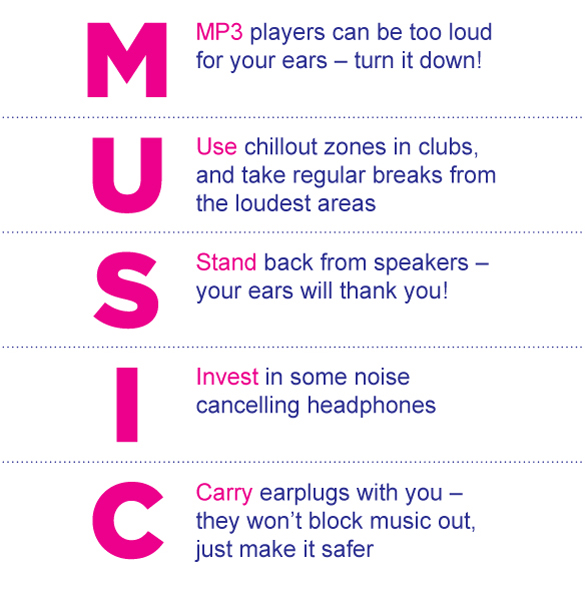
Remember - M.U.S.I.C.


quarta-feira, 31 de outubro de 2012

It's all gone Pete Tong - how to be a DJ with a hearing disorder

"Its All Gone Pete Tong" is a comedy based on a true story and Winner of Best Feature Film at Toronto Film Festival and Gen Art Film Festival. Paul Kaye stars as Frankie Wilde, the legendary British DJ and musical mastermind of the underground club scene whose career is cut down at its pinnacle by unthinkable tragedy - the loss of his hearing. 

The story takes us through Frankie's battle with his hearing disorder: he is rapidly going deaf with only one functioning ear to complete the new Ibiza season. Frankie dives into a low period, struggling with deafness in utter depression. After a year of locking himself away he emerges on the other side with a fresh attitude towards his affliction. He accepts his deafness and learns to function without sound. Will Frankie make it back to the DJ booth? Will his new single be any good? Will he get back his opulent old life or does he even want it back? When you can't hear, things look very different.


Info from Amazon and IMDb

segunda-feira, 23 de julho de 2012

Tinnitus (Ringing in the Ear)

One well-known effect of overexposure to noise is hearing loss, or the inability to hear certain sounds. But another risk is a phenomenon that is just the opposite: perceiving sounds when there are none. This perception of sound when no external sound is present is called tinnitus, or "ringing in the ear." 

What Does Tinnitus Sound Like? 
People with tinnitus hear noises in their ears. Each person with tinnitus experiences it differently. "Tinnitus" is from the Latin word for "ringing," and to some people the noise does indeed sound like ringing. Others describe their ear noise as roaring, rushing, hissing, chirping, beeping, buzzing, whistling, or clicking. The sound might be high-pitched, low-pitched, or multi-toned, or it might sound like static. It might seem to be in one ear, both ears, or inside the head. The sound might be constant, or it might come and go. It might be just barely noticeable, or it might seem screamingly loud. 

Nearly everyone experiences ear noise; in total silence, most people will report hearing faint buzzing, pulsing, or whirring sounds, the normal compensatory activity of the nerves in the hearing pathway. It's when these sounds are intrusive that it becomes tinnitus. 

What Causes Tinnitus? 
Tinnitus may be caused by various drugs, ear disorders, infections, injuries, or psychiatric disorders, but the most common cause by far is loud noise, such as from explosions, gunfire, amplified music, farm machinery, or emergency sirens. Many rock musicians develop tinnitus, and it is common among combat veterans. Ninety percent of people with tinnitus also have some degree of hearing loss. 

Like hearing loss, tinnitus can occur temporarily, brought on by an episode of too much noise, or it may happen after years of overexposure to noise. It can appear suddenly or gradually. 


What Is It Like to Have Tinnitus? 
Tinnitus is a subjective experience. Similar to the experience of pain, the annoyance of tinnitus cannot be measured objectively. Some people hardly notice the noise unless they consciously turn their attention to it. For others it may disrupt sleep and concentration, and can cause depression and emotional shifts. According to the American Tinnitus Association, about 25% of those with tinnitus find it disturbing enough that they seek medical attention for it, and for about 4% of sufferers, it is so debilitating that it seriously interferes with normal daily functioning. For a few people the experience is so agonizing that they are driven to consider suicide. 

How Is Tinnitus Treated? 
Tinnitus is a symptom, not a disease, and there is no cure. Even in some cases where the auditory nerves have been severed (during the removal of a tumor from the inner ear, for example), so that the patient loses all physical hearing, tinnitus can persist. 

There are a range of treatment options for chronic tinnitus; no one treatment works for everyone. Many treatments focus on helping the person learn to coexist with it, using a variety of stress management and relaxation techniques, counseling, and sometimes antidepressants or other drugs. Some people find it helpful to mask the ringing in the ear by using white noise, and there are in-ear white noise devices made for this purpose. 

Two treatments, tinnitus retraining therapy and Neuromonics, combine directive counseling with white noise or music that is individually engineered for the patient's audiological profile, to teach the brain circuitry to filter out the tinnitus signals. These treatments take six months to two years and cost several thousand dollars. 

Temporary Ringing in the Ear? 
If you experience temporary ringing of the ears from an exposure to loud noise, consider it a warning sign. First, immediately leave the loud environment, or put in ear plugs if that is not possible. Next, rest your ears for 24 hours, meaning no loud sounds at all, to give your ears a chance to recover. And lastly, next time you are in a similar environment in the future, be sure to wear hearing protection. There are plenty of tinnitus sufferers who will tell you that you don't want their nightmare. 

From NoiseHelp

quinta-feira, 31 de maio de 2012

72% of Teenagers Experienced Reduced Hearing Ability After Attending Concert

M. Jennifer Derebery, MD, House Clinic physician, along with the House Research Institute tested teens’ hearing before and after a concert.


The hearing loss that may be experienced after a pop rock concert is not generally believed to be permanent. It is called a temporary threshold shift and usually disappears within 16-48 hours, after which a person’s hearing returns to previous levels. “Teenagers need to understand a single exposure to loud noise either from a concert or personal listening device can lead to hearing loss,” said M. Jennifer Derebery, MD, lead author and physician at the House Clinic. “With multiple exposures to noise over 85 decibels, the tiny hair cells may stop functioning and the hearing loss may be permanent.”

In the study, twenty-nine teenagers were given free tickets to a rock concert. To ensure a similar level of noise exposure for the teens, there were two blocks of seats within close range of each other. The seats were located in front of the stage at the far end of the venue approximately 15-18 rows up from the floor. The importance of using hearing protection was explained to the teenagers. Researchers then offered hearing protection to the subjects and encouraged them to use the foam ear plugs. However, only three teenagers chose to do so. Three adult researchers sat with the teenagers. Using a calibrated sound pressure meter, 1,645 measurements of sound decibel (dBA) levels were recorded during the 26 songs played during the three hour concert. The sound levels ranged from 82-110 dBA, with an average of 98.5 dBA. The mean level was greater than 100 dBA for 10 of the 26 songs.


Following the concert, the majority of the study participants also were found to have a significant reduction in the Distortion Product Otoacoustic Emissions (OAE) test. This test checks the function of the tiny outer hair cells in the inner ear that are believed to be the most vulnerable to damage from prolonged noise exposure, and are crucial to normal hearing, the ability to hear soft (or low level sounds), and the ability to understand speech, especially in noisy environments. With exposure to loud noise, the outer hair cells show a reduction in their ability to function, which may later recover. However, it is known that with repeated exposure to loud noise, the tiny hair cells may become permanently damaged. Recent animal research suggests that a single exposure to loud noise may result in permanent damage to the hearing nerve connections themselves that are necessary to hear sound.

Following the concert, 53.6 percent of the teens said they did not think they were hearing as well after the concert. Twenty-five percent reported they were experiencing tinnitus or ringing in their ears, which they did not have before the concert.

In the most recent government survey on health in the United States National Health and Nutrition Examination Survey (NHANES) 2005-2006, 20% of adolescents were found to have at least slight hearing loss, a 31% increase from a similar survey done from 1988-1994.

“It also means we definitely need to be doing more to ensure the sound levels at concerts are not so loud as to cause hearing loss and neurological damage in teenagers, as well as adults,” said Derebery. “Only 3 of our 29 teens chose to use ear protection, even when it was given to them and they were encouraged to do so. We have to assume this is typical behavior for most teen listeners, so we have the responsibility to get the sound levels down to safer levels.”

Researchers recommend teenagers and young adults take an active role in protecting their hearing by utilizing a variety of sound meter ‘apps’ available for smart phones. The sound meters will give a rough estimate of the noise level allowing someone to take the necessary steps to protect their hearing such as wearing ear plugs at a concert. In addition, Derebery and the study co-authors would like to see concert promoters and the musicians themselves take steps to lower sound levels as well as encourage young concert goers to use hearing protection.

Info accessed at Science Daily

quinta-feira, 26 de abril de 2012

April 25 - International Noise Awareness Day

The International Noise Awareness Day initiative was launched in the USA by the Center for Hearing and Communication, a non-profit organization. The aim of this global campaign is to raise awareness among the general public of the issue of noise and the risks it poses. 
This year the “International Noise Awareness Day” will take place for the 17th time on April 25. People all over the world are being urged to take part through a variety of activities, including open days held by hearing care professionals, talks at health authorities, universities and schools, expert round table discussions, noise level measurement campaigns and readings. A worldwide “Quiet Diet” – a minute of silence – is also planned for 2.15 pm to 2.16 pm. 


In Germany, the "Tag gegen Lärm" was introduced in 1997 by Prof. Brigitte Schulte-Fortkamp, a professor at the Technische Universität Berlin, and is due to take place this year, for the 15th time, on April 25 – on the same day as the “International Noise Awareness Day” in the USA. 
The theme of this year’s event in Germany is Emission: Impossible! In addition to general noise-related issues, the initiative is focusing on two key topics in particular: the impact of aircraft noise and the sound environment experienced by children.

Let's spread the word about the danger of noise!

Info acceed at Hear the World

terça-feira, 3 de abril de 2012

Dangerous new teen trend on hearing loss VS technology

Is a fact that loud music causes permanent, irreversible sensorineural hearing loss. But there’s a very important — and dangerous — new trend we’re seeing with today’s youth: in the video below (produced by high schoolers) you can see that the boy at 1:00 and the girl at 1:18 have the attitude that “technology will fix the problem”. The prevalence of teen hearing loss increased from 14.9% in 1994 to 19.5% in 2006.


Info acceed at The Hearing Blog

segunda-feira, 26 de março de 2012

Noise is one of the great underappreciated health hazards of our time

Noise is no minor nuisance. It is one of the great underappreciated health hazards of our time—the secondhand smoke of our ears.
Noise pollution doesn't get the attention of A-list diseases, but there are a few crusaders raising their voices against the onslaught. One of them is Arline Bronzaft, a professor emeritus at the City University of New York.
What's the problem with this high-decibel world? "The most obvious one is hearing loss," Dr. Bronzaft says. Some 26 million adults are walking around with noise-induced hearing loss, according to the Centers for Disease Control and Prevention.
Noise also has a surprisingly potent effect on our stress level, cardiovascular system and concentration. In Paleo times, a loud noise signaled a threat, so noise triggers the release of the stress hormone cortisol, which raises blood pressure.
A University of British Columbia review of 6,300 people who work in noisy jobs found that they suffer two to three times more heart problems than those who work in quiet settings. A former World Health Organization official estimates (with a bit of alarmism) that noise-induced strain may cause 45,000 deadly heart attacks a year.
Noise also wreaks havoc on the brain. Dr. Bronzaft conducted a landmark study at a public school in Manhattan's Washington Heights neighborhood, published in the journal Environment and Behavior in 1975. Some of the classrooms directly faced an elevated subway track. Every five minutes the students heard a train rattle by. Other classrooms were tucked on the opposite side of the building, away from the noise. The difference? By the sixth grade, the kids on the noisy side were nearly a year behind. Since then, her conclusions about the effects of noise on concentration have been backed up by a pile of other studies, on both students and adults.
Adapted from (and more info at) The Wall Street Journal

sábado, 10 de março de 2012

Ruído provocado pelo homem fragmenta populações de aves

Pesquisadores da área de zoologia da Universidade de Salamanca analisaram durante os últimos oito anos o canto das diversas aves passeriformes na Espanha e no Brasil. Em algumas espécies, o canto é fundamental para a defesa de território e para atrair um companheiro. No entanto, o ruído provocado pelo homem tem vindo a alterar o seu modo de comunicação. Desta forma, as aves necessitam de se adaptar às circunstâncias, contudo, tem-se verificado situações em que indivíduos de uma mesma espécie, mas de diferentes regiões, encontram dificuldades para comunicar entre si. Ou seja, o homem tem vindo a promover a fragmentação dentro destas populações.

“A nossa premissa é de que, se existe um grande ruído ambiental, as aves modificam o seu canto com uma amplitude de frequências distinta, tons mais altos ou mais baixos, para que outros congéneres as possam escutar”, explica Salvador Peris, professor catedrático de Biologia Animal da Universidade de Salamanca.

Os trabalhos focaram-se em espécies de melro (Turdus) e corruíra (Troglodytes) no estado brasileiro do Pará, região do Amazonas, bem como na província de Salamanca. “Existem populações dentro de uma mesma espécie tão separadas pelo canto que podem chegar a nunca se encontrar.” Afirma que estamos diante de uma fragmentação das populações devido ao ruído produzido pela mão humana. Neste sentido, é possível que um melro de uma cidade da Espanha possa ser incapaz de comunicar-se com um do campo. “A isto chamamos mutação cultural, que é mais rápida que a mutação genética”, indica Peris, “e resulta na fragmentação das populações”.

A equipa da Universidade de Salamanca analisou questões concretas como a flutuação de populações de aves na província de Salamanca em estradas com distintos níveis de tráfego, comprovando que os lugares ruidosos afetam a presença destes animais. Dentre as espécies cuja população descendeu estão as aves migrantes transaarianas, que “têm repertórios de canto mais complexos e, portanto, o ruído ambiental afeta-as mais”, indica o especialista. Outras espécies, como pardais, tentilhões e serines “suportam melhor o ruído ambiental”, especialmente as denominadas aves urbanas, como os estorninhos, que são capazes de “modificar rapidamente seu canto, de um ano para outro”.

Adaptado de DiCyT

Imagem acedida em http://ddasari.com/wordpress/wp-content/uploads/2011/04/birdCity.jpg


domingo, 5 de fevereiro de 2012

Persistent Workplace Noise More Than Doubles Risk of Heart Disease

A persistently noisy workplace more than doubles an employee's risk of serious heart disease, suggests research published online in Occupational and Environmental Medicine. Young male smokers seem to be particularly at risk,according to the study's findings.
The researchers base their findings on a nationally representative sample of more than 6,000 U.S. employees, aged 20 and up, who had been part of the US National Health and Nutrition Examination Survey (NHANES) between 1999 and 2004.

This study included detailed household interviews, addressing lifestyle and occupational health, medical examinations, and blood tests.
Participants were grouped into those who endured persistent loud noise at work, to the extent that it was difficult to talk at normal volume for at least three months, and those working in more comfortable surroundings.
One in five (21-percent) workers said they put up with a noisy workplace for an average of almost nine consecutive months. This group, whose average age is 40, also tended to smoke and weigh more than their peers working in quieter work environments, adding to the group's risk factors for heart disease.
Workers in persistently noisy workplaces were between two to three times as likely to have serious heart problems as their peers in quiet workplaces.

The association to heart disease was particularly strong among workers under 50, who made up more than 4,500 of the total sample. They were between three and four times as likely to have angina or coronary artery disease or to have had a heart attack.Blood tests of these workers did not indicate particularly high levels of cholesterol or inflammatory proteins, both of which are associated with heart disease. But diastolic blood pressure, which measures the pressure of the artery walls when the heart relaxes between heartbeats, was higher than normal, a condition known as isolated diastolic hypertension, or IDH. This is an independent predictor of serious heart problems.

The findings suggest that those employees regularly exposed to loud noise at work were twice as likely to have IDH.The authors speculate that loud noise day after day may be as strong an external stressor as sudden strong emotion or physical exertion, the effect of which is to prompt various chemical messengers to constrict blood flow through the coronary arteries.
Researchers conclude: "This study suggests that excess noise exposure in the workplace is an important occupational health issue and deserves special attention."

Info at AcoustiBlok
Image at http://t2.gstatic.com/images?q=tbn:ANd9GcSCFxZvJ4F-5ROkmwSPz1jRTU9YcFJhS7St3m4f9B7BfV0yBRwNfA

sexta-feira, 20 de janeiro de 2012

Hearing loss in musicians - Is there a problem?

There are several unique reasons to be concerned about sound exposure and its effect on musicians’ hearing. First of all, musicians’ working hours are usually quite varied as compared to most employees, especially during performance weeks. Also, musicians spend a varied amount of time practicing, playing solo and as a member of different groups, and enjoying the music of others. One review article suggested that classical musicians play an average of 25 hours per week (Palin 1994), but this could vary widely from week to week, and from person to person.


Most people are aware that loud noises are bad for your ears, and might lead to hearing problems down the road. Since listening to music is a positive, pleasant, and desirable activity for many people, it may come as a surprise that music can have a negative effect on hearing too.

Work-related hearing loss is quite a different problem for those in the music industry than it is for industrial workers. Musicians and DJs regard themselves as having superior hearing, specially trained to detect nuance or tone, and consider that their hearing is their livelihood (Axelsson and Lindgren 1981; Early and Horstman 1996). A slight hearing loss that may not bother an industrial worker may cause difficulties for a musician. In addition, controlling musicians’ exposures poses a different challenge than it does for other types of employees.

Even though sound levels can be exceedingly high at music venues, very few investigations on the hearing of musicians had actually taken place as of the early 1980’s (Axelsson and Lindgren 1981). An early study on the hearing of orchestral musicians at an opera house found that 42% of participants had hearing loss that was greater than expected for their age (Axelsson and Lindgren 1981). Many other studies, including both classical and pop musicians, have found similar results: musicians have worse hearing than would be expected based on their age (Lebo and Oliphant 1968; Westmore and Eversden 1981; Jansson and Karlsson 1983; Hart, Geltman et al. 1987; Ostri, Eller et al. 1989; Royster, Royster et al. 1991; Fearn 1993; Jaroszewski and Rakowski 1994; Jaroszewski, Fidecki et al. 1998; Eaton and Gillis 2002; Kahari, Zachau et al. 2003).
Other researchers report no difference between musicians and other workers (Arnold and Miskolczy-Fodor 1960; Karlsson, Lundquist et al. 1983; Johnson, Sherman et al. 1985; McBride 1992; Kahari 2001); this difference in finding may be due to varying definitions of what constitutes hearing loss, difficulties in quantifying leisure noise exposure, or poor study quality (Sataloff 1991).

The general consensus in the literature suggests that hearing loss is a problem for musicians, and this varies across type of music played (i.e. – rock or jazz or classical),and type of instrument played (Palin 1994; Mikl 1995). It has been suggested that since sound pressure levels (SPL) produced by music can be (and often are) well above the recommended 85 dB, we have good reason to be concerned about musicians’ hearing.

Another complaint from some musicians (but more typically of industrial workers) is a disease called “tinnitus”, which is a permanent ringing in the ears caused by chronic exposure to loud noises (Axelsson and Ringdahl 1989; Axelsson and Prasher 2000; Lockwood, Salvi et al. 2001). More research needs to be done on the musician’s experience with this often highly debilitating disease.

Info accessed at ActSafe
Image at http://t0.gstatic.com/images?q=tbn:ANd9GcQdkYJY92kfHUQZHQaQRP2V5rLX_bFJeu3kWqhbSBATNz5GxlEJtw

segunda-feira, 14 de novembro de 2011

Ruído rouba um milhão de anos de vida saudável

Estudo sobre o impacto da poluição sonora diz que o barulho dificulta o sono a um quinto dos europeus

Um estudo sobre o impacto da poluição sonora na Europa divulgado ontem pela Comissão Europeia revela que o ruído rouba um milhão de anos de vida saudável por ano. O trabalho realizado em colaboração com a Organização Mundial de Saúde conclui que um em cada três europeus sente-se perturbado pelo barulho durante o dia e um quinto tem dificuldades em dormir devido ao ruído dos carros, comboios e aviões. "O ruído ambiental deve ser considerado não só como causador de incómodo mas como uma preocupação de saúde pública", lê-se no relatório.

A análise converte o impacto do ruído em anos perdidos de vida saudável ou devido a morte prematura. Segundo o relatório, o ruído anual na Europa rouba 61 mil anos de vida saudável com o aparecimento de doenças do coração, provoca 45 mil anos de dificuldades cognitivas nas crianças, 903 mil anos de perturbações do sono, 22 mil anos de zumbido nos ouvidos e 903 mil anos de incómodo. Tudo somado, dizem os investigadores, significa que todos os anos se perde pelo menos um milhão de anos de vida saudável nos países da Europa Ocidental. Dividindo pela esperança média de vida actual, dá mais de 13 mil vidas.

texto de Marta Reis, acedido em iOnline
imagem acedida em http://t1.gstatic.com/images?q=tbn:ANd9GcS6ORjXneZYc2UqnDdBwy4wNjeluaq00mEAEW96TiNaS7um66D5CQ

quinta-feira, 18 de agosto de 2011

Nações Unidas querem estudar ruído que a humanidade faz no mar


A humanidade está a emitir cada vez mais ruído no oceano, e as Nações Unidas querem agora perceber que impacto é que esse barulho está a ter na vida marinha. Para isso, vão lançar um projecto de investigação que durará uma década e será apresentado numa conferência no final de Agosto.

“Muitas das espécies marinhas dependem maioritariamente do som como fonte de informação ambiental, da mesma forma que os humanos dependem da sua visão”, disse nesta quarta-feira a UNESCO, que anunciou que a reunião está agendada de 30 de Agosto a 1 de Setembro, em Paris.

“Apesar de haver pouca investigação que prove esta ligação, há uma suspeita crescente que o aumento dos níveis de ruído, e de alguns sons em particular, estão a alterar o comportamento de animais marinhos e talvez até estejam a reduzir a capacidade de estas realizarem as funções normais da vida como encontrar comida, procurar parceiros ou evitar os predadores”, defendeu a UNESCO.Um dos exemplos que a organização apresenta refere-se às baleias.

Há pesquisas que sugerem que várias espécies de baleias aumentaram o volume dos gemidos, cliques e guinchos que fazem para comunicar entre si.

Na reunião vão estar cientistas marinhos de topo, representantes do sector privado e das organizações militares que irão planear como é que vai ser realizada a experiência. O projecto terá o nome de Experiência do Oceano Tranquilo. Espera-se que estes dez anos de pesquisa preencham as lacunas de conhecimento que existem hoje, e que permitam uma melhor e mais informada gestão do ruído feito nos oceanos.

Imagem em: http://www.vibranews.com.br/upload/4b29ebc9d3382fe166b587cd377cdb5f.jpg

domingo, 12 de junho de 2011

Alterações no comportamento devidas ao excesso de ruído

Alguns autores relatam uma extensa série de sintomas comportamentais consequentes à exposição prolongada a excesso de ruído. São eles:
  • mudanças na conduta e no humor;
  • falta de atenção e concentração; cefaléia;
  • redução da potência sexual;
  • ansiedade;
  • depressão;
  • cansaço;
  • fadiga e stress.
Estes sintomas podem aparecer isolados ou mesmo juntamente. Gerges(1995), acrescenta ainda:
  • nervosismo;
  • fadiga mental;
  • frustração;
  • irritabilidade;
  • mau ajustamento em situações novas;
  • conflitos sociais entre trabalhadores expostos ao ruído.
Alguns psiquiatras e psicólogos crêem que níveis fortes de ruído podem inclusivamente desencadear o aumento de reacções e comportamentos de agressividade e violência. Afirmam que pessoas expostas ao ruído prolongado mostram maior sensibilidade e propensão para envolver-se em situações de brigas e discussões, pois tendem a irritar-se com maior facilidade.
Apesar disso, importa relembrar que os factores individuais têm também um papel importante na tolerância ao ruído, o que quer dizer que alguns indivíduos são mais susceptíveis do que outros a este tipo de estímulo.


Em relação aos profissionais da música, Quick & Lapertosa realizaram, em 1981, uma pesquisa com músicos de várias orquestras de música moderna. Após ensaios repetidos, durante um certo período, estes evidenciaram as seguintes queixas:
  • Nervosismo: 83%
  • Tendência agressiva: 39%
  • Cefaléia: 29%
  • Cansaço e desânimo: 21%
Portanto, para promover a sua tranquilidade e bem-estar, procure rodear-se de silêncio várias vezes ao longo do dia :)


sábado, 23 de abril de 2011

O enfraquecimento do ouvido e as suas causas

Neste blogue, tem vindo a ser abordado o ruído como causa da perda auditiva. No entanto, no sentido de completar o repertório de causas que podem levar à perda auditiva, pensou-se referir outros factores que podem estar na origem das referidas perturbações. Diversas doenças circulatórias, alterações metabólicas e otites são responsáveis pelo enfraquecimento da capacidade auditiva, no entanto é a deterioração devido à idade a que mais frequentemente leva a este problema, verificando-se que depois dos 65 anos, 3 em cada 10 pessoas têm problemas auditivos. Apesar disso, importa salientar que é o ruído que merece presença no banco dos réus.

  • Idade

As estatísticas indicam que em Portugal, mais de 30% da população com idade superior a 65 anos sofre de problemas auditivos mais ou menos graves, como consequência do avançar dos anos. A diminuição da capacidade de audição é a perturbação mais comum na terceira idade.

  • Ruído

O ruído é a primeira causa de invalidez profissional (50-60% dos pensionistas). No entanto, um estudo levado a cabo em Lisboa demonstrou que existe já uma significativa diminuição da audição em menores de 18 anos. Um professor de Audiologia refere “Devíamos rever a teoria de que a diminuição da audição é própria de uma cidade industrializada. Já não é só a idade que conta, mas o tempo que lá se permaneceu exposto a barulho excessivo.” De facto a lei considera 65 Decibéis como o “máximo suportável sem danos para o ouvido” mas este limite é quebrado continuamente.

A ensurdecedora coluna sonora dos nossos dias não é só fastidiosa, tornando-se prejudicial. Para além disso, não é só o ouvido a sofrer sérias repercussões consequentes do excesso de ruído, mas todo o organismo.

  • Hereditariedade

Cerca de um terço dos deficientes auditivos nascem com a perturbação, devendo-se a mesma a factores hereditários, nomeadamente, um gene recentemente descoberto, a connexina 26. Com isto, compreende-se que se na família houver algum caso de surdez, existe a possibilidade de transmissão aos filhos.

  • Infecção
Diversas doenças bacterianas e virais (escarlatina, sarampo, meningite, entre outras) podem afectar o ouvido e provocar a perda de audição mais ou menos grave. A otite é uma doença frequente na infância e, quando não é adequadamente tratada, pode causar uma surdez irreversível.

  • Otosclerose

Trata-se de uma doença que provoca a perda de mobilidade dos ossos do ouvido médio, o que, consequentemente, leva a que as vibrações transmitidas pelo ouvido interno não se (re)produzam adequadamente, como num ouvido saudável, e, por conseguinte, diminui a capacidade de percepção auditiva.

  • Medicamentos, tabaco e alcóol

Está provado que alguns medicamentos podem exercer uma acção negativa nos diversos órgãos do sistema auditivo, designando-se por ototóxicos, o que significa que são tóxicos para o ouvido. Também o álcool e o tabaco podem exercer este tipo de efeitos nocivos.


Informação acedida e adaptada a partir de: “O guia Amplifon para a audição”, Lisboa: AMPLIFON

Imagem acedida em: http://www.tudosobreplantas.net/wp-content/uploads/2009/02/mezinhas-para-dores-ouvido.jpg

sábado, 16 de abril de 2011

A saúde vocal dos professores

Hoje, 16 de Abril, comemora-se o dia mundial da Voz. A voz pode ser definida como o som produzido pela vibração das pregas vocais (também conhecidas como cordas vocais), na laringe, pelo ar vindo dos pulmões.

As alterações/distúrbios da voz podem estar relacionadas à inadequada competição sonora nos contextos ambientais nos quais as pessoas se inserem, decorrente dos elevados níveis de ruído. Têm sido desenvolvidas pesquisas que reconhecem e avaliam o ruído nos diferentes locais de trabalho, relacionando-o aos distúrbios vocais, bem como seus possíveis efeitos na saúde do trabalhador e produtividade do mesmo.

A actividade profissional revela-se um factor de risco para o surgimento de lesões que acometem as estruturas corporais. Essas lesões podem afectar a realização plena das actividades profissionais, gerando, por vezes, incapacidades temporárias ou permanentes, podendo, nos casos mais graves, levar ao afastamento definitivo das actividades profissionais.

Os profissionais da voz, isto é, indivíduos que têm como instrumento de trabalho a voz, da qual dependem para exercer a sua profissão (entre os quais: Cantores, Actores, Professores, Pastores e Padres, Advogados, Juízes, Promotores, Repórteres, Operadores de telemarketing, Políticos, etc.) constituem profissionais de risco relativamente à saúde vocal. Ora se estes profissionais laborarem em ambientes ruidosos, maiores serão as probabilidades de ocorrerem danos relacionados com problemas vocais, em virtude da necessidade de concorrência da voz com os ruídos do contexto.

Gonçalves, Silva & Coutinho (2009) desenvolveram um estudo que correlaciona o ruído com a ocorrência de problemas vocais em professores, o qual considerei pertinente divulgar no âmbito do Dia Mundial da Voz. Os autores apontam que os professores estão entre os dez profissionais que mais procuram ajuda médica devido a problemas vocais.

A intervenção em Terapia da Fala torna-se uma ajuda importante importante, mas não constitui uma solução, pois o professor, depois de afastado e recuperado, volta às mesmas condições de ambiente de trabalho ruidosas que exigem o esforço acrescido que está na causa do problema.

A inteligibilidade de fala é definida como a relação entre palavras faladas e palavras entendidas expressa em porcentagem. Para que a comunicação seja efectiva e inteligível, a inteligibilidade da fala deve ser superior a 90% (Nepomuceno, 1994 cit in Gonçalves, Silva & Coutinho, 2009). Para palavras fáceis, a inteligibilidade de 100% das mesmas exige uma intensidade de voz de 10 dB(A) acima do ruído de fundo.

O ruído acima de 60 dB(A) exige ao professor a elevação do nível de intensidade de sua voz para que os alunos o ouçam e compreendam. Naturalmente que este nível elevado causará fadiga, além de levar à utilização esforçada e excessiva das pregas vocais de quem fala, potenciando o desenvolvimento de patologias como nódulos vocais, que irão interferir directamente no seu nível de desempenho. Com o passar dos anos, o professor começa a percepcionar sinais deste abuso vocal, entre os quais rouquidão e dores ao nível da laringe, além de outros problemas indirectos tais como efeitos psicológicos pela incapacidade de exercer a função de maneira adequada e efeitos colaterais diversos como dores de cabeça.Por outro lado, a concorrência de estímulos sonoros compromete as condições de concentração para actividades mentais e psicológicas dos alunos que o escutam (Pimentel-Souza, 1992 cit in Gonçalves, Silva & Coutinho, 2009).

De acordo com o estudo, 91,9% dos professores afirmaram que ao ministrar as aulas o ruído é efectivamente um problema que interfere no seu desempenho profissional, tendo 94,6% dos professores afirmado que deste modo sentem necessidade de aumentar o seu tom de voz para que haja inteligibilidade de fala na sala de aula. Os professores citam sintomas como desgaste vocal (51,4%), dores de garganta (83,8%), voz rouca (81,1%), dores de cabeça (48,6%) e stress (83,8%) como decorrentes do desgaste físico provocado pelo ruído em sala de aula. Diante deste fato, conclui-se que o ruído é o grande causador de desgaste e fadiga vocal dos professores, além de contribuir para a queda de produtividade dos profissionais bem como do rendimento dos alunos.

Nessa pesquisa foi possível concluir que em 97,30% das salas de aula avaliadas os níveis de ruído encontravam-se acima dos limites padrão aceitáveis exigidos pelas entidades competentes.

Torna-se necessário tomar as devidas precauções, as quais passam por manter hábitos de uma boa saúde vocal, eliminar, se possível, as fontes de ruído desnecessárias e, também, procurar promover um melhor isolamento sonoro nas salas de aulas de modo a evitar que as ondas sonoras sejam reflectidas, condicionando a compreensão do que é dito e exigindo que o professor fale mais alto.

Brevemente colocarei algumas sugestões para preservar a saúde vocal.


Informação acedida em:
Gonçalves, V.; Silva, L. & Coutinho, A. (2009). Ruído como agente comprometedor da inteligibilidade de fala dos professores. Produção, v.19, n.3, pp. 466-447
Imagem acedida em:
http://www.brasilescola.com/upload/e/voz%20de%20professor.jpg

domingo, 10 de abril de 2011